
How Carbon Intelligence Shapes the Price of Pollution


The idea that pollution is just an environmental problem is completely out of date. Today, the cost of carbon is a major financial factor, actively reshaping global markets, corporate decisions, and even national laws. With climate regulations getting stricter and carbon markets expanding, companies are now facing intense pressure to measure, verify, and dramatically reduce their emissions using hard science. This is where carbon intelligence becomes crucial.
It’s an advanced approach that combines emissions data, ESG modeling, and climate finance insights to show companies exactly how their pollution translates into real economic risk and cost. Whether we’re talking about carbon taxes, cap-and-trade programs, or voluntary offsetting, the global shift toward a sustainable economy demands rock-solid, actionable data, not just back-of-the-napkin estimates.
The core tools for this transition which is carbon pricing analytics and carbon finance software are now dictating how the true cost of greenhouse gases is calculated, optimized, and predicted.
In this article, we’ll dive into what carbon intelligence actually is, the powerful data economy driving it, and its rapidly increasing influence on how pollution is priced across every industry and market worldwide.
What Is Carbon Intelligence?
Carbon intelligence refers to the advanced data systems and algorithms used to measure, analyze, and predict greenhouse gas (GHG) emissions and their financial impact. It integrates:
- Scientific emissions datasets
- Market signals from carbon exchanges
- Policy-driven pricing models
- Corporate ESG reporting metrics
- Real-time footprint tracking
- Climate risk analytics
In simple terms, carbon intelligence turns emissions into data-driven financial assets and liabilities, enabling organizations to link pollution directly to cost.
This intelligence layer fuels the emerging ESG data economy, where emissions information becomes a tradable, monetizable, and strategic resource.
Also See: Neural Networks of Nature: How Deep Learning Decodes Emission Patterns
Why Understanding the Price of Pollution Matters
The transition to net-zero economies requires a clear link between carbon output and economic consequence. But pollution doesn’t have a natural price and society must assign one.
Carbon intelligence helps determine this price by answering key questions:
- How much does a ton of CO₂ cost today? (Varies by market, region, and demand)
- How will climate policy change that price? (Future regulations affect long-term financial planning)
- What is the financial risk of inaction? (Penalties, taxes, stranded assets)
- What reduction strategies offer the best ROI? (Energy efficiency, carbon removal, renewable adoption)
Without accurate, science-backed intelligence, pollution pricing becomes unpredictable, and climate strategies fail.
The Mechanics of Pollution Cost Modeling

At the heart of carbon intelligence is pollution cost modeling, a sophisticated process involving:
1. Real-Time Emissions Measurement
Sensors, IoT devices, and digital MRV (Measurement, Reporting, and Verification) ensure organizations track emissions at a granular level.
2. Carbon Market Data Inputs
Models integrate data from:
- EU Emissions Trading System (EU ETS)
- California Cap-and-Trade
- RGGI markets
- Voluntary carbon exchanges
- National carbon tax databases
This ensures pricing reflects real-world supply and demand.
3. Policy Scenario Forecasting
Carbon pricing analytics simulate:
- Future carbon tax increases
- New regulations
- International carbon border adjustments
- Helping companies prepare for long-term cost changes.
4. Economic Impact Calculations
The model converts emissions into:
- Operational costs
- Product carbon intensity
- Financial liabilities
- Market competitiveness impact
- Social cost of carbon (SCC)
This quantifies how pollution affects financial performance.
5. Reduction Pathway Optimization
Carbon intelligence software identifies the cheapest and most effective reduction strategies across:
- Energy systems
- Logistics networks
- Industrial processes
- Supply chains
- This ensures companies can reduce emissions at the lowest possible cost.
How Carbon Intelligence Shapes Carbon Pricing
1. Dynamic Carbon Pricing Instead of Static Taxes
Historically, pollution pricing relied on fixed carbon taxes. Today, carbon intelligence allows dynamic pricing, adjusting based on:
- Market volatility
- Policy shifts
- Industry benchmarks
- Emissions intensity
- Climate risk projections
This leads to fairer, more accurate costs across sectors.
2. Market Transparency and Predictability
Carbon intelligence tools reduce price uncertainty by offering:
- Real-time carbon market insights
- Predictive models based on trading volumes
- Risk analytics for future price spikes
When organizations can anticipate carbon costs, they invest more confidently in decarbonization.
3. Linking Corporate Behavior to Market Value
Investors now evaluate companies based on:
- Emissions efficiency
- Carbon intensity per product
- Climate risk exposure
- Reduction commitments
Stronger carbon intelligence means higher ESG scores which results in better market valuations.
4. Enabling the Global ESG Data Economy
Carbon data is now an economic commodity.
Global markets buy, sell, and trade carbon-linked assets like:
- Offsets
- Allowances
- Sustainability-linked loans
- Green bonds
Carbon Finance Software: The Backbone of Modern Carbon Markets
Carbon finance software is becoming essential for accurate pollution pricing and modern carbon markets. These platforms centralize emissions data from multiple sources, making it possible for companies to see their full carbon footprint with precision. They automate GHG accounting for Scopes 1, 2, and 3, ensuring calculations are consistent, auditable, and scientifically sound.
The software also links emissions to real financial impact by tracking market prices, carbon taxes, and allowance costs in real time. With built-in forecasting tools, organizations can model long-term carbon liabilities, evaluate the ROI of decarbonization initiatives, and prepare for regulatory shifts.
Beyond compliance, these systems reveal emissions hotspots and guide smarter sustainability strategies turning carbon data into insights that drive both environmental and financial performance.
Data-Driven Carbon Pricing: A New Economic Paradigm
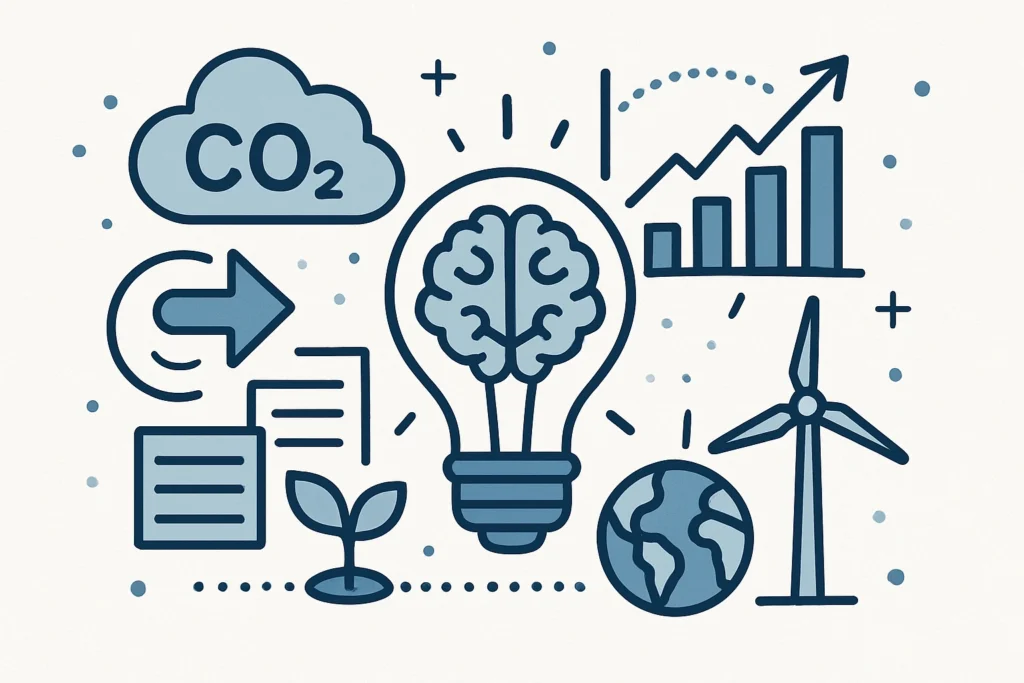
Carbon intelligence is reshaping markets in several important ways:
1. Pollution Becomes a Financial KPI
Companies now report emissions with the same seriousness as:
- Profit
- Operating expenses
- Market share
- Carbon becomes part of boardroom discussions, impacting
- Cost of goods sold (COGS)
- Investor attractiveness
- Regulatory compliance
- Public reputation
2. Supply Chains Become Carbon-Efficient
Carbon intelligence allows companies to rank suppliers based on, emissions intensity, climate risk, and renewable energy usage which leads to:
- Low-carbon procurement
- Sustainable manufacturing
- Transparent product labeling
3. Consumers Influence the Price of Pollution
Consumer demand for ethical and climate-safe products increases pressure on brands to disclose carbon footprints.
As transparency increases, markets naturally penalize pollution-heavy products.
4. Global Carbon Markets Become More Stable
Data-rich carbon markets reduce:
- Fraud
- Price manipulation
- Emissions underreporting
Creating a trustworthy global trading ecosystem.
FAQ: Carbon Intelligence
What is carbon intelligence?
A data-driven framework combining emissions analytics, market insights, and climate finance modeling to understand and price pollution accurately.
How does carbon intelligence affect carbon pricing?
It sets dynamic, real-world prices based on scientific data, market trends, and policy changes.
Why is carbon pricing important?
It financially incentivizes companies to reduce emissions, transforming pollution into a measurable economic cost.
What industries benefit most from carbon pricing analytics?
Energy, manufacturing, logistics, aviation, agriculture, and consumer goods.
How does carbon finance software help?
It automates carbon accounting, provides market insights, and helps businesses forecast carbon-related financial risks.
Conclusion
Carbon intelligence is basically the new standard for how the world measures and values pollution. It’s a clever combination of emissions data, financial logic, and instant analytics that takes carbon which was once just an invisible exhaust and turns it into a key economic metric.
The takeaway is any company that invests in carbon pricing analytics, good ESG platforms, and carbon finance software is going to be far better off in an economy that demands sustainability.
The bottom line is that pollution has a cost, and carbon intelligence is the tool that is finally making that cost transparent, fair, and truly impactful.