What Is the Difference Between Carbon-Neutral, Net-Zero, and Climate Positive?

With climate commitments now essential to every business’s plan, we’re constantly hearing the phrases carbon-neutral, net-zero, and climate positive. If you’ve felt a bit overwhelmed or confused by them, you’re not alone. The truth is, these terms are frequently misunderstood or, worse, treated as synonyms. This lack of clarity makes it incredibly difficult for companies to set clear targets, for investors to trust ESG reporting, and for consumers to know if a brand is truly walking the talk. 

Getting these concepts right is the first and most vital step toward creating an honest climate strategy and staying compliant with respected frameworks like the Science Based Targets initiative. 

In this article, let’s define each term simply, show you exactly how they differ, and provide a clear roadmap for what your business must do to genuinely meet these standards.

Carbon-Neutral vs Net-Zero vs Climate Positive: Why the Distinction Matters

Before diving into each definition, here’s the simplest way to understand the hierarchy:

Carbon-Neutral: You compensate for emissions.

Net-Zero: You eliminate emissions to near-zero before offsetting the rest.

Climate Positive: You remove more carbon than you emit.

These terms represent increasing levels of climate commitment. But the details and implications are where the real difference lies.

1. What Does Carbon-Neutral Mean?

A company is carbon-neutral when it measures its emissions and offsets the equivalent amount through verified carbon credits.

Essentially it means, emissions (any amount) – Carbon Offsets = Net Carbon Output of 0

This does not require the company to reduce its emissions first. It only requires accurate measurement and offset purchases.

How Companies Achieve Carbon Neutrality

To claim carbon neutrality, businesses typically take these steps:

Calculate total emissions (Scopes 1, 2, and often parts of Scope 3).

Purchase carbon credits from projects like:

  • Reforestation
  • Renewable energy development
  • Methane capture
  • Verified carbon removal technologies
  • Submit claims to third-party verifiers (e.g., PAS 2060).

Carbon neutrality allows flexibility and speed, which is why many companies adopt it as a short-term climate target.

Limitations of Carbon Neutrality

While valuable, carbon neutrality has its critics. The main concerns are:

  • Companies can offset without reducing emissions.
  • Some offsets lack transparency or permanence.
  • It may delay real decarbonization.
  • This is why investors and regulators increasingly prefer net-zero goals.

Also See: Neural Networks of Nature: How Deep Learning Decodes Emission Patterns

2. What Does Net-Zero Mean?

carbon offsetting explained

A company reaches net-zero when it reduces emissions across its entire value chain to as close to zero as scientifically possible—and only offsets residual emissions that cannot be eliminated.

This aligns with IPCC guidance, which requires:

  • 90–95% real reductions
  • 5–10% neutralization via carbon removal, not avoidance credits

Net-zero isn’t just about balancing emissions, it’s about fundamentally transforming operations.

Net-Zero Requirements for Businesses

To meet credible net-zero goals, companies need:

1. Science-based decarbonization

Reduction targets aligned with:

  • SBTi Net-Zero Standard
  • Paris Agreement’s 1.5°C pathway

2. Full value chain coverage

Net-zero also demands full value-chain coverage. Companies must measure and reduce emissions across Scopes 1, 2, and 3. Since Scope 3 often makes up most of a company’s footprint, this means working closely with suppliers, partners, and product lifecycles.

3. Residual emissions neutralization

Finally, net-zero includes a small portion of residual emissions that can’t be eliminated yet. These must be neutralized using high-quality carbon removal solutions, such as direct air capture, verified reforestation, or biochar.

Why Net-Zero Is More Credible Than Carbon Neutral

Net-zero requires systemic change, including:

  • Clean energy adoption
  • Supplier emissions reduction
  • Low-carbon logistics
  • Product redesign
  • Circular manufacturing

In short, carbon-neutral compensates, net-zero transforms.

3. What Does Climate Positive Mean?

A company becomes climate positive (also known as “carbon negative”) when it removes more carbon from the atmosphere than it emits.

Formula: Carbon Removed > Carbon Emitted

Climate positive represents the highest level of climate ambition.

How Businesses Achieve Climate Positive Status

To move beyond net-zero, companies must:

  • Reach net-zero emissions first
  • Continue investing in carbon removal projects that exceed their own footprint
  • Enhance natural carbon sinks through land, ocean, and biodiversity projects
  • Support global decarbonization initiatives beyond internal reductions

For example, Microsoft committed to removing all historical emissions by 2050.

Why Climate Positive Is the Future of Corporate Sustainability

Climate positive action goes beyond basic responsibility, it’s a strategic advantage for modern companies. It strengthens brand leadership, builds deeper trust with stakeholders, and creates a buffer against rising carbon taxes. 

By removing more emissions than they produce, climate-positive businesses also play a meaningful role in supporting global climate goals during the most critical decades ahead. As regulations tighten and expectations rise, this approach is quickly becoming the new benchmark for corporate sustainability.

Understanding the Role of Carbon Offsetting

Many businesses confuse carbon-neutral vs net-zero because of carbon offsetting.

Here’s the critical distinction:

Carbon-neutral: Offsetting is the primary solution.

Net-zero: Offsetting is a last resort after major reductions.

Climate positive: Offsetting is used to go beyond neutrality.

Which Goal Should Businesses Choose?

what is net-zero goals

Businesses should choose their climate goal based on how mature their sustainability strategy is. Carbon neutrality is the most practical starting point, especially for companies building early-stage programs or looking for quick wins in ESG visibility. 

As they progress, net-zero becomes the natural next step, offering deeper emission cuts and stronger alignment with investor expectations and regulatory trends. 

For organizations aiming to lead their industry, the long-term target is climate positive, going beyond neutral to actively remove more carbon than they emit and contributing to broader climate restoration efforts.

FAQ: Carbon-Neutral, Net-Zero, and Climate Positive

1. Is carbon-neutral the same as net-zero?

No. Carbon-neutral relies on offsets. Net-zero requires deep emission reductions before using a small amount of carbon removal.

2. Can a company be climate positive without being net-zero first?

No. Climate positive requires reaching net-zero first, then removing additional carbon.

3. Are carbon offsets reliable?

Offsets vary in quality. High-integrity removal offsets are required for net-zero under SBTi standards.

4. Do all companies need to tackle Scope 3 emissions?

For net-zero and climate positive, yes. For carbon-neutral often optional.

5. Which term do regulators prefer?

Net-zero is the gold standard for regulatory and investor reporting systems.

Conclusion

The difference between carbon-neutral, net-zero, and climate positive is that it defines the credibility and depth of a company’s climate impact. While carbon neutrality is a good starting point, net-zero represents true transformation. Climate positive goes even further, supporting global climate repair.

For businesses aiming to lead in sustainability, understanding (and correctly applying) these terms is essential. The world is moving toward stricter science-aligned frameworks, and companies that align early will gain both environmental and economic advantages.

Best Carbon Accounting Climate Software for 2025: A Buyer’s Guide

Best Carbon Accounting Climate Software for 2025: A Buyer’s Guide

Introduction

As the focus on sustainability and climate action intensifies, businesses are increasingly looking for carbon accounting climate software to help them track and reduce their carbon footprint. With regulatory pressure to reduce greenhouse gas emissions and the growing demand for corporate sustainability, having the right tools in place is essential for businesses aiming to meet carbon reduction goals.

In this blog, we will explore the best carbon accounting climate software options available in 2025. These tools are designed to help businesses efficiently measure, report, and manage their carbon emissions, ensuring compliance with environmental regulations while driving long-term sustainability. Whether you’re a small startup or a large enterprise, this guide will help you choose the right software for your carbon accounting needs.


Why Carbon Accounting Software Matters

Carbon accounting software is essential for businesses that are committed to reducing their carbon emissions and enhancing their sustainability efforts. These software tools provide businesses with a comprehensive way to measure, track, and report their carbon footprint, offering a range of benefits:

  • Efficient Emissions Tracking: Automated systems that help businesses track their greenhouse gas emissions from various sources in real-time.
  • Accurate Reporting: Simplifies the process of generating reports for regulatory compliance, stakeholders, and sustainability goals.
  • Carbon Reduction Strategies: Helps businesses identify opportunities for energy savings, process optimization, and sustainability improvements.
  • Cost Savings: Identifies areas for improvement that can reduce operational costs and increase energy efficiency.

With increasing pressure from both consumers and regulators, businesses that adopt carbon accounting software are better positioned to meet carbon neutrality targets and demonstrate leadership in sustainability.


Top Carbon Accounting Climate Software for 2025

Here are some of the best carbon accounting climate software options for 2025, based on their features, scalability, and ability to meet diverse business needs.

1. Carbon Trust

Carbon Trust is one of the most well-known names in the carbon accounting industry. The software is widely used by businesses looking to reduce their carbon emissions and improve energy efficiency. Carbon Trust offers a comprehensive suite of tools that help businesses calculate their carbon footprint, track progress, and implement reduction strategies.

  • Key Features:
    • Carbon footprint calculation across all operations (Scope 1, 2, and 3)
    • Energy management tools for optimizing energy consumption
    • Sustainability reporting tools for meeting regulatory and compliance standards
    • Carbon reduction strategies tailored to specific industries
  • Ideal For: Businesses looking for a scalable solution that can handle comprehensive carbon accounting and energy management.

2. SimaPro

SimaPro is a powerful tool designed for lifecycle assessments (LCA), making it ideal for businesses that need detailed and in-depth analysis of their carbon emissions. The software is perfect for companies that need to evaluate the environmental impact of their products and services from start to finish.

  • Key Features:
    • Lifecycle assessment (LCA) for detailed emissions calculations
    • Carbon footprint analysis for products, services, and supply chains
    • Supply chain analysis to assess indirect emissions (Scope 3)
    • Integration with existing enterprise systems for seamless data collection
  • Ideal For: Large organizations and industries such as manufacturing, construction, and product design that need a deep dive into their emissions data.

3. Envizi

Envizi is an all-in-one sustainability management software that helps organizations track carbon emissions and manage their overall environmental impact. With a focus on energy management and carbon accounting, Envizi is designed to help businesses reduce their carbon footprint while improving efficiency.

  • Key Features:
    • Real-time tracking of carbon emissions across all business operations
    • Energy efficiency tools to optimize energy use
    • Detailed carbon emissions reports for regulatory compliance
    • Data visualization for better decision-making
  • Ideal For: Corporations looking for a comprehensive platform that combines carbon accounting with energy management and sustainability reporting.

4. Greenhouse Gas (GHG) Protocol Software

The GHG Protocol is a global standard for carbon accounting and emissions reporting. The software is widely used by businesses to ensure compliance with international regulations and to provide transparency in their carbon emissions reporting.

  • Key Features:
    • Compliance with GHG Protocol standards
    • Detailed emissions tracking for Scope 1, Scope 2, and Scope 3
    • Simplified carbon emissions reporting for regulatory bodies
    • Data integration with other business management tools
  • Ideal For: Businesses that need to comply with global carbon reporting standards and regulatory frameworks.

5. EcoReal

EcoReal offers a comprehensive sustainability platform that includes carbon accounting and energy management tools. The software helps businesses track their carbon footprint, optimize energy use, and report on sustainability performance.

  • Key Features:
    • Real-time carbon emissions tracking for Scope 1, Scope 2, and Scope 3
    • Energy management tools to monitor and reduce energy consumption
    • Detailed sustainability reporting tools for compliance and stakeholders
    • Carbon reduction strategies tailored to industry-specific needs
  • Ideal For: Businesses looking for an all-in-one platform to manage carbon emissions, energy usage, and sustainability reporting.

6. Climate Smart Business Solutions

Climate Smart is an affordable and user-friendly software designed specifically for small and medium-sized businesses (SMBs). It focuses on simplifying the carbon accounting process while providing essential tools to track greenhouse gas emissions and reduce energy consumption.

  • Key Features:
    • Easy-to-use interface for tracking carbon emissions
    • Simple carbon footprint calculations for small businesses
    • Integration with energy and waste data to identify improvement areas
    • Emission reduction recommendations based on collected data
  • Ideal For: Small businesses looking for an affordable and simple tool to get started with carbon accounting.

How to Choose the Right Carbon Accounting Climate Software

Selecting the best carbon accounting climate software for your business can be challenging with so many options available. To help you make the right decision, here are some key factors to consider:

1. Business Size and Complexity

The size and complexity of your business will play a significant role in determining which software is best suited for your needs. Large corporations with complex supply chains and multiple operations will need a more robust solution, such as SimaPro or Envizi. Small and medium-sized businesses (SMBs) may benefit from simpler, more affordable tools like Climate Smart.

2. Features and Functionalities

Different software tools offer varying levels of functionality, from basic carbon footprint calculations to more advanced lifecycle assessments (LCA) and energy management. When selecting a software tool, consider what features are most important for your organization. If you need detailed emissions analysis, tools like SimaPro and GHG Protocol may be ideal. If your focus is on energy efficiency, consider solutions like Envizi.

3. Integration with Existing Systems

If your business already uses enterprise resource planning (ERP) software or other management tools, you’ll want carbon accounting software that integrates seamlessly with these systems. This integration will make it easier to collect emissions data and generate reports without manually entering data.

4. Compliance Needs

If your business operates in regions with strict carbon emissions regulations, you’ll need a software solution that ensures compliance with these standards. Look for tools that align with international reporting frameworks such as the GHG Protocol or ISO 14064, ensuring your business meets regulatory requirements.

5. Budget

Finally, consider the budget for your carbon accounting solution. Enterprise-level solutions like Envizi and SimaPro come with a higher price tag, while small business solutions like Climate Smart are more affordable. Be sure to choose a tool that fits your business’s budget while still offering the functionality you need.


Conclusion

Choosing the right carbon accounting climate software is crucial for businesses that are serious about sustainability and carbon reduction. In 2025, businesses need powerful, accurate, and easy-to-use tools to track greenhouse gas emissions, ensure regulatory compliance, and meet carbon neutrality goals. The software options listed in this guide provide businesses with the tools they need to succeed in their carbon accounting journey, whether they are large corporations or small startups.

By selecting the best software solution for your needs, you can gain valuable insights into your business’s carbon footprint, identify reduction opportunities, and take action to minimize your environmental impact. The right carbon accounting software will empower you to build a more sustainable future while achieving long-term success for your business.


Get Started with Carbon Accounting Software Today

Ready to find the best carbon accounting climate software for your business? Subscribe to our newsletter for the latest insights and updates on carbon accounting software, or download our guide to choose the best tool for your company’s sustainability goals.

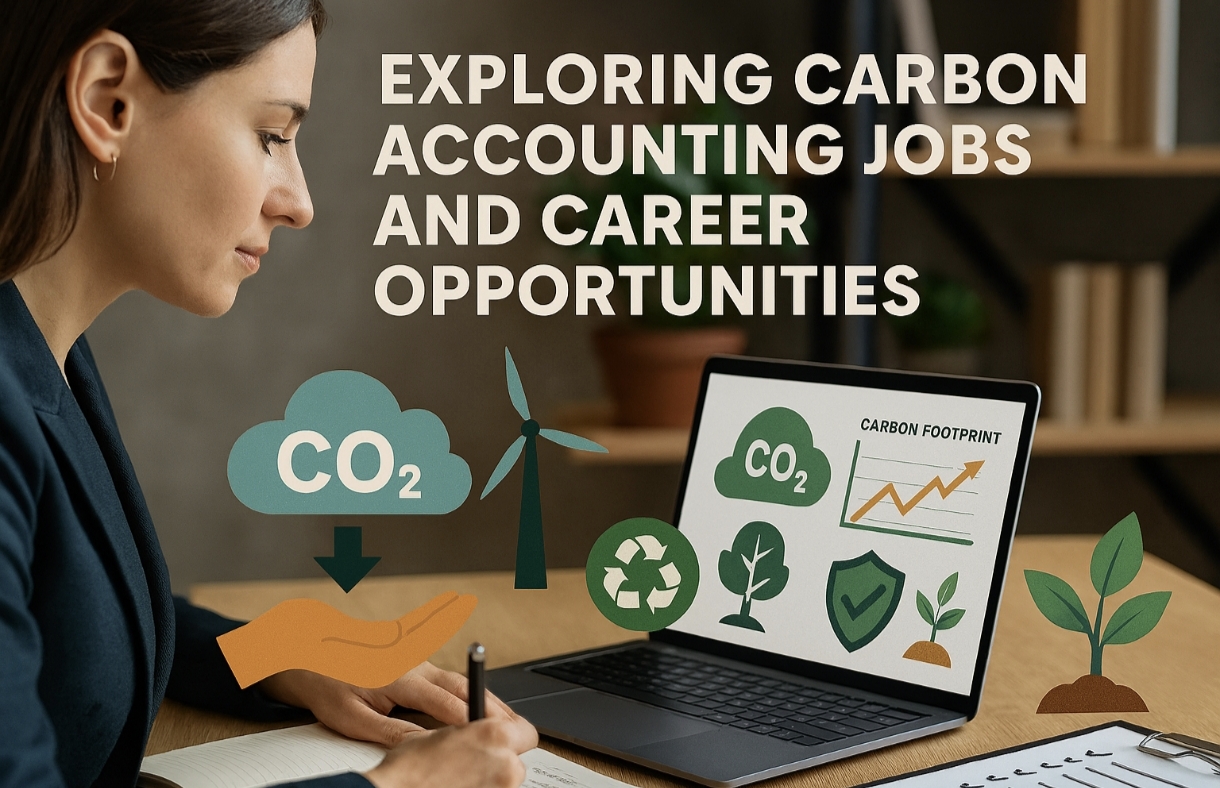
Exploring Carbon Accounting Jobs and Career Opportunities

Exploring Carbon Accounting Jobs and Career Opportunities

Introduction

As businesses worldwide turn their focus to sustainability, the demand for professionals skilled in carbon accounting is on the rise. Carbon accounting plays a vital role in helping organizations measure, track, and reduce their carbon emissions. It allows companies to identify opportunities for operational efficiency, reduce their carbon footprint, and comply with environmental regulations. With sustainability now at the forefront of business strategy, carbon accounting jobs are becoming increasingly sought-after.

If you are interested in pursuing a career in carbon accounting or environmental sustainability, now is the perfect time to get started. In this blog, we will explore the growing demand for carbon accounting professionals, the types of roles available, the skills required for success, and how carbon accounting can be a rewarding career path for anyone interested in making a difference.


What Are Carbon Accounting Jobs?

Carbon accounting jobs refer to positions within organizations or consulting firms that focus on measuring, reporting, and managing greenhouse gas (GHG) emissions. These roles often involve working with businesses to calculate their carbon footprint, set carbon reduction targets, implement sustainability strategies, and comply with environmental regulations.

There are a variety of carbon accounting jobs available across industries, from corporate sustainability departments to consulting firms specializing in environmental management. These positions require a deep understanding of carbon accounting methodologies, emission tracking tools, sustainability frameworks, and regulatory requirements.

Key Responsibilities in Carbon Accounting Jobs:

  • Measuring and tracking carbon emissions: Carbon accounting professionals are responsible for calculating the total emissions generated by business activities, such as energy use, transportation, and waste management.
  • Reporting emissions data: A key responsibility is to generate and submit accurate emissions reports to regulatory bodies, stakeholders, or industry frameworks such as the GHG Protocol or Carbon Disclosure Project (CDP).
  • Setting carbon reduction targets: Carbon accounting professionals help businesses set actionable goals for reducing their carbon footprint over time. These targets are often aligned with global sustainability initiatives like the Paris Agreement.
  • Developing sustainability strategies: In addition to carbon accounting, professionals may assist organizations in adopting sustainable practices, such as renewable energy adoption, energy efficiency improvements, and sustainable supply chain management.
  • Ensuring regulatory compliance: Carbon accounting professionals ensure that businesses comply with local, national, and international carbon regulations and emissions reporting requirements.

The Growing Demand for Carbon Accounting Professionals

As global pressure to address climate change intensifies, carbon accounting has become a critical component of corporate sustainability strategies. Governments, investors, and consumers are increasingly expecting companies to reduce their carbon emissions and demonstrate progress toward sustainability goals. This has led to a surge in the demand for carbon accounting professionals who can help organizations track and reduce their carbon footprint.

1. Global Regulatory Focus on Carbon Emissions

Governments worldwide are implementing stricter carbon emissions regulations to meet climate goals. As a result, businesses must have accurate, transparent carbon accounting practices to comply with reporting requirements. This regulatory focus creates a growing need for skilled professionals who understand the GHG Protocol, ISO 14064, and other environmental standards.

2. Increased Corporate Sustainability Initiatives

In addition to regulatory pressure, companies are also adopting sustainability initiatives to meet investor expectations and appeal to eco-conscious consumers. Many businesses are setting ambitious goals to achieve carbon neutrality or net-zero emissions by 2050. As organizations embark on these ambitious sustainability journeys, they need skilled professionals to guide them through the process.

3. Investor Interest in Sustainability

Investors are increasingly looking for companies that prioritize sustainability and demonstrate measurable progress in reducing carbon emissions. Many investors are using ESG (Environmental, Social, and Governance) criteria to assess potential investments. This has led to a growing need for professionals who can help businesses report their carbon emissions and sustainability efforts accurately.


Types of Carbon Accounting Jobs

The carbon accounting field offers a variety of job opportunities across industries. Below are some common job titles and roles available in the field:

1. Carbon Accounting Specialist

A Carbon Accounting Specialist is responsible for tracking and measuring greenhouse gas emissions within an organization. This role involves calculating a company’s carbon footprint, reporting emissions data to regulators, and helping the business develop strategies for carbon reduction.

2. Sustainability Manager

A Sustainability Manager oversees a company’s sustainability strategy, including its carbon accounting efforts. This role involves setting carbon reduction targets, implementing sustainable practices, and ensuring compliance with environmental regulations. Sustainability managers often collaborate with other departments to integrate sustainability goals across business operations.

3. Environmental Consultant

Environmental Consultants provide expert advice to businesses on how to manage their carbon emissions and improve sustainability practices. These professionals may specialize in carbon accounting, GHG emissions reporting, or energy efficiency. Environmental consultants often work for consulting firms or as independent contractors, providing guidance to businesses across various industries.

4. Corporate Sustainability Director

A Corporate Sustainability Director oversees the overall sustainability strategy of a business. This role involves managing the carbon accounting process, setting long-term sustainability goals, and ensuring that the company’s emissions are reduced over time. Corporate sustainability directors play a key role in developing a company’s environmental policies and integrating sustainability into corporate decision-making.

5. Carbon Auditor

A Carbon Auditor conducts independent audits of a business’s carbon emissions data to ensure compliance with carbon accounting standards. This role is often based in a third-party auditing firm and involves verifying emissions data, reviewing emissions reports, and assessing whether a company is meeting its carbon reduction targets.


Skills and Qualifications Required for Carbon Accounting Jobs

To succeed in a carbon accounting career, professionals need a combination of technical knowledge and soft skills. Below are the key skills and qualifications required for carbon accounting jobs:

1. Knowledge of Carbon Accounting Standards

Professionals in carbon accounting must be familiar with widely recognized carbon accounting frameworks such as the GHG Protocol, ISO 14064, and Carbon Trust Standard. These standards outline the methods for calculating and reporting greenhouse gas emissions, ensuring that businesses comply with international regulations.

2. Analytical and Technical Skills

Carbon accounting professionals need strong analytical skills to assess emissions data and identify areas for improvement. Familiarity with carbon accounting software (e.g., SimaPro, Envizi, Carbon Trust) is essential for collecting and analyzing emissions data accurately. Professionals must be able to interpret complex data sets and translate them into actionable insights for businesses.

3. Strong Communication Skills

Carbon accountants need excellent communication skills to explain complex emissions data to non-expert stakeholders. Whether it’s presenting carbon reduction strategies to leadership teams or explaining emissions reports to investors, strong communication skills are critical in ensuring that carbon accounting efforts are understood and acted upon across the organization.

4. Problem-Solving and Critical Thinking

In carbon accounting jobs, professionals often encounter complex challenges related to reducing carbon emissions. Problem-solving and critical thinking are essential for identifying innovative solutions, whether it’s finding ways to reduce Scope 1 emissions from production processes or optimizing Scope 3 emissions from the supply chain.

5. Educational Background

A bachelor’s degree in environmental science, sustainability, business, or a related field is typically required for carbon accounting jobs. Many professionals also pursue certifications in carbon accounting, such as the Carbon Management Certificate or ISO 14064 certification, to enhance their credentials.


How to Start a Career in Carbon Accounting

1. Pursue Relevant Education and Training

The first step to a career in carbon accounting is obtaining a relevant education. A degree in environmental science, sustainability, or business management provides a solid foundation. To specialize in carbon accounting, you can pursue certification programs or online courses focused on carbon emissions, environmental management, and sustainability reporting.

2. Gain Practical Experience

Internships, volunteer opportunities, or entry-level jobs in environmental consulting or corporate sustainability provide hands-on experience in carbon accounting. Gaining practical experience will help you develop the necessary skills and make you more competitive in the job market.

3. Stay Updated on Industry Trends

The field of carbon accounting is evolving rapidly, with new technologies, regulations, and methodologies emerging frequently. Stay updated on industry trends by subscribing to sustainability newsletters, attending webinars, and participating in conferences focused on carbon emissions and environmental sustainability.


Conclusion

As the demand for sustainable business practices grows, carbon accounting jobs are becoming essential to help businesses track, reduce, and report their carbon emissions. These jobs offer a unique opportunity to contribute to global sustainability efforts while also gaining valuable skills in greenhouse gas accounting, carbon reduction, and regulatory compliance.

Whether you’re looking to work in corporate sustainability, environmental consulting, or regulatory compliance, a career in carbon accounting offers a pathway to making a significant impact. The future of carbon accounting is bright, and with the right education and skills, you can position yourself as a leader in this growing field.


Get Started with Carbon Accounting Today

Are you interested in pursuing a career in carbon accounting? Subscribe to our newsletter for more information on carbon accounting jobs and career opportunities, or download our guide to learn how you can start your journey in this exciting and rewarding field!

Carbon Accounting Definition: What You Need to Know

Carbon Accounting Definition: What You Need to Know

Introduction

As the world continues to face environmental challenges such as climate change and global warming, businesses are under increasing pressure to reduce their carbon emissions. One of the most effective ways for companies to track, manage, and reduce their carbon footprint is through carbon accounting. But what exactly does carbon accounting mean, and why is it so important for businesses?

In this blog, we will explore the definition of carbon accounting, its importance for businesses and the environment, and how it can help companies set and achieve carbon reduction goals. Whether you’re an environmental professional, a business leader, or someone interested in sustainability, this guide will give you a clear understanding of what carbon accounting is and why it should be a priority for any organization.


What is Carbon Accounting?

Carbon accounting refers to the practice of measuring, tracking, and managing greenhouse gas (GHG) emissions that are generated by business activities. These emissions can come from various sources, including energy use, transportation, production processes, and waste management. By implementing carbon accounting, businesses can calculate their carbon footprint and gain insight into how their operations contribute to global warming.

The goal of carbon accounting is not only to understand a business’s environmental impact but also to create a framework for reducing carbon emissions and improving overall sustainability. Through carbon accounting, companies can identify opportunities for energy efficiency, switch to renewable energy sources, and adopt more sustainable practices that will help mitigate the effects of climate change.


Why is Carbon Accounting Important?

1. Regulatory Compliance

Governments and regulatory bodies around the world are implementing increasingly stringent laws and regulations aimed at reducing carbon emissions. For example, under the Paris Agreement, countries have committed to reducing their carbon emissions to combat climate change and limit the rise in global temperatures.

For businesses, staying compliant with these environmental regulations is crucial. Carbon accounting ensures that companies are accurately measuring their emissions and reporting them according to local, national, and international standards. It also helps businesses stay ahead of new regulations, such as carbon taxes or mandatory emissions reduction goals.

By adopting carbon accounting, businesses can avoid penalties, fines, and reputational damage that may arise from non-compliance with environmental regulations.

2. Transparency and Accountability

Today’s consumers, investors, and stakeholders are placing increasing emphasis on transparency in business operations. Companies that fail to demonstrate their commitment to sustainability and reducing carbon emissions risk losing consumer trust and facing scrutiny from environmental advocacy groups.

Carbon accounting provides a transparent way for businesses to measure and report their emissions, which helps them stay accountable to stakeholders. By publicly disclosing their carbon footprint, businesses can show that they are taking responsibility for their environmental impact and actively working to reduce it. This level of transparency is key to building trust with eco-conscious consumers and investors who prioritize sustainability.

3. Carbon Reduction and Sustainability Goals

One of the most important aspects of carbon accounting is its role in helping businesses reduce their carbon footprint. By tracking emissions over time, businesses can set carbon reduction targets and implement strategies to reduce their environmental impact.

For example, businesses may discover that a significant portion of their carbon emissions comes from energy use in their production facilities. In response, they may switch to renewable energy sources, implement energy-efficient technologies, or modify their production processes to minimize emissions. Through carbon accounting, businesses can measure the effectiveness of their efforts and ensure they are making progress toward their sustainability goals.

4. Cost Savings and Operational Efficiency

While carbon accounting is often seen as an environmental initiative, it also offers significant cost savings for businesses. By analyzing their carbon emissions and identifying areas of inefficiency, companies can implement energy-saving strategies that reduce utility bills and lower operational costs.

For example, carbon accounting can highlight inefficiencies in energy consumption, such as outdated equipment or systems that consume excessive amounts of energy. By replacing these systems with more energy-efficient alternatives, businesses can reduce both their carbon footprint and their operating costs.


How Does Carbon Accounting Work?

Carbon Footprint Calculation

The first step in carbon accounting is calculating the total amount of carbon emissions generated by a company’s activities. This is known as the carbon footprint. Businesses calculate their carbon footprint by measuring emissions from direct and indirect sources across three categories or scopes:

  • Scope 1 (Direct Emissions): These are emissions from sources owned or controlled by the business, such as fuel combustion in company vehicles, machinery, or production facilities.
  • Scope 2 (Indirect Emissions): These are emissions from the generation of purchased electricity that the company consumes. Although the company does not directly produce these emissions, they are still associated with its energy usage.
  • Scope 3 (Other Indirect Emissions): These include emissions that occur throughout the company’s value chain, such as supplier emissions, employee travel, waste disposal, and product use.

By measuring emissions across all three scopes, businesses can get a comprehensive picture of their carbon footprint and identify areas where reductions can be made.

Carbon Accounting Tools and Software

There are a variety of tools and software available to help businesses with carbon accounting. These tools automate the process of measuring, tracking, and reporting emissions, saving businesses time and resources. Many of these tools also provide valuable insights into how to reduce emissions and improve overall energy efficiency.

Some of the popular carbon accounting software includes:

  • SimaPro: A comprehensive tool for life cycle assessment and carbon footprint calculation.
  • Carbon Trust: A software that helps businesses measure, manage, and reduce their carbon emissions.
  • Envizi: A sustainability management platform that includes carbon accounting and energy management tools.

These software tools simplify the carbon accounting process, making it easier for businesses to track their emissions and report data to stakeholders and regulatory bodies.

Setting Carbon Reduction Targets

Once the carbon footprint is calculated, businesses can set carbon reduction targets. These targets are typically based on industry benchmarks, regulatory requirements, or global climate action goals such as the Paris Agreement. The targets may include specific goals for reducing emissions in each of the three scopes.

For example, a business might aim to reduce its Scope 1 emissions by 20% over the next five years by switching to renewable energy for its production facilities. Similarly, it may set goals for reducing Scope 3 emissions by optimizing its supply chain or encouraging employees to adopt sustainable travel practices.

Reporting Carbon Emissions

After calculating the carbon footprint and setting reduction targets, businesses need to report their emissions to regulators, investors, and other stakeholders. Many businesses are required to report their emissions through established frameworks such as the GHG Protocol, ISO 14064, or the Carbon Disclosure Project (CDP).

These reporting frameworks ensure that emissions are measured consistently and transparently, making it easier for stakeholders to assess a business’s carbon performance. Reporting also provides businesses with a way to demonstrate progress toward carbon neutrality and their commitment to sustainability.


Conclusion

In conclusion, carbon accounting is a crucial practice for businesses seeking to reduce their carbon footprint, comply with environmental regulations, and contribute to global sustainability goals. By understanding the carbon accounting definition and adopting the right tools and frameworks, businesses can track and reduce their greenhouse gas emissions while improving operational efficiency and enhancing their reputation.

As the demand for sustainability increases, carbon accounting will continue to play a key role in helping businesses manage their environmental impact. Whether you’re a business leader, an environmental professional, or an eco-conscious consumer, understanding carbon accounting is essential for driving positive change and creating a more sustainable future.


Get Started with Carbon Accounting Today

Ready to begin measuring and reducing your carbon footprint? Subscribe to our newsletter for more insights into carbon accounting, or download our guide to help your business start its journey toward carbon neutrality today!

How Carbon Intelligence Shapes the Price of Pollution

The idea that pollution is just an environmental problem is completely out of date. Today, the cost of carbon is a major financial factor, actively reshaping global markets, corporate decisions, and even national laws. With climate regulations getting stricter and carbon markets expanding, companies are now facing intense pressure to measure, verify, and dramatically reduce their emissions using hard science. This is where carbon intelligence becomes crucial. 

It’s an advanced approach that combines emissions data, ESG modeling, and climate finance insights to show companies exactly how their pollution translates into real economic risk and cost. Whether we’re talking about carbon taxes, cap-and-trade programs, or voluntary offsetting, the global shift toward a sustainable economy demands rock-solid, actionable data, not just back-of-the-napkin estimates.

The core tools for this transition which is carbon pricing analytics and carbon finance software are now dictating how the true cost of greenhouse gases is calculated, optimized, and predicted. 

In this article, we’ll dive into what carbon intelligence actually is, the powerful data economy driving it, and its rapidly increasing influence on how pollution is priced across every industry and market worldwide.

What Is Carbon Intelligence?

Carbon intelligence refers to the advanced data systems and algorithms used to measure, analyze, and predict greenhouse gas (GHG) emissions and their financial impact. It integrates:

  • Scientific emissions datasets
  • Market signals from carbon exchanges
  • Policy-driven pricing models
  • Corporate ESG reporting metrics
  • Real-time footprint tracking
  • Climate risk analytics

In simple terms, carbon intelligence turns emissions into data-driven financial assets and liabilities, enabling organizations to link pollution directly to cost.

This intelligence layer fuels the emerging ESG data economy, where emissions information becomes a tradable, monetizable, and strategic resource.

Also See: Neural Networks of Nature: How Deep Learning Decodes Emission Patterns

Why Understanding the Price of Pollution Matters

The transition to net-zero economies requires a clear link between carbon output and economic consequence. But pollution doesn’t have a natural price and society must assign one.

Carbon intelligence helps determine this price by answering key questions:

  • How much does a ton of CO₂ cost today? (Varies by market, region, and demand)
  • How will climate policy change that price? (Future regulations affect long-term financial planning)
  • What is the financial risk of inaction? (Penalties, taxes, stranded assets)
  • What reduction strategies offer the best ROI? (Energy efficiency, carbon removal, renewable adoption)

Without accurate, science-backed intelligence, pollution pricing becomes unpredictable, and climate strategies fail.

The Mechanics of Pollution Cost Modeling

what is carbon pricing analytics

At the heart of carbon intelligence is pollution cost modeling, a sophisticated process involving:

1. Real-Time Emissions Measurement

Sensors, IoT devices, and digital MRV (Measurement, Reporting, and Verification) ensure organizations track emissions at a granular level.

2. Carbon Market Data Inputs

Models integrate data from:

  • EU Emissions Trading System (EU ETS)
  • California Cap-and-Trade
  • RGGI markets
  • Voluntary carbon exchanges
  • National carbon tax databases

This ensures pricing reflects real-world supply and demand.

3. Policy Scenario Forecasting

Carbon pricing analytics simulate:

  • Future carbon tax increases
  • New regulations
  • International carbon border adjustments
  • Helping companies prepare for long-term cost changes.

4. Economic Impact Calculations

The model converts emissions into:

  • Operational costs
  • Product carbon intensity
  • Financial liabilities
  • Market competitiveness impact
  • Social cost of carbon (SCC)

This quantifies how pollution affects financial performance.

5. Reduction Pathway Optimization

Carbon intelligence software identifies the cheapest and most effective reduction strategies across:

  • Energy systems
  • Logistics networks
  • Industrial processes
  • Supply chains
  • This ensures companies can reduce emissions at the lowest possible cost.

How Carbon Intelligence Shapes Carbon Pricing

1. Dynamic Carbon Pricing Instead of Static Taxes

Historically, pollution pricing relied on fixed carbon taxes. Today, carbon intelligence allows dynamic pricing, adjusting based on:

  • Market volatility
  • Policy shifts
  • Industry benchmarks
  • Emissions intensity
  • Climate risk projections

This leads to fairer, more accurate costs across sectors.

2. Market Transparency and Predictability

Carbon intelligence tools reduce price uncertainty by offering:

  • Real-time carbon market insights
  • Predictive models based on trading volumes
  • Risk analytics for future price spikes

When organizations can anticipate carbon costs, they invest more confidently in decarbonization.

3. Linking Corporate Behavior to Market Value

Investors now evaluate companies based on:

  • Emissions efficiency
  • Carbon intensity per product
  • Climate risk exposure
  • Reduction commitments

Stronger carbon intelligence means higher ESG scores which results in better market valuations.

4. Enabling the Global ESG Data Economy

Carbon data is now an economic commodity.

Global markets buy, sell, and trade carbon-linked assets like:

  • Offsets
  • Allowances
  • Sustainability-linked loans
  • Green bonds

Carbon Finance Software: The Backbone of Modern Carbon Markets

Carbon finance software is becoming essential for accurate pollution pricing and modern carbon markets. These platforms centralize emissions data from multiple sources, making it possible for companies to see their full carbon footprint with precision. They automate GHG accounting for Scopes 1, 2, and 3, ensuring calculations are consistent, auditable, and scientifically sound. 

The software also links emissions to real financial impact by tracking market prices, carbon taxes, and allowance costs in real time. With built-in forecasting tools, organizations can model long-term carbon liabilities, evaluate the ROI of decarbonization initiatives, and prepare for regulatory shifts. 

Beyond compliance, these systems reveal emissions hotspots and guide smarter sustainability strategies turning carbon data into insights that drive both environmental and financial performance.

Data-Driven Carbon Pricing: A New Economic Paradigm

what is ESG data economy

Carbon intelligence is reshaping markets in several important ways:

1. Pollution Becomes a Financial KPI

Companies now report emissions with the same seriousness as:

  • Profit
  • Operating expenses
  • Market share
  • Carbon becomes part of boardroom discussions, impacting
  • Cost of goods sold (COGS)
  • Investor attractiveness
  • Regulatory compliance
  • Public reputation

2. Supply Chains Become Carbon-Efficient

Carbon intelligence allows companies to rank suppliers based on, emissions intensity, climate risk, and renewable energy usage which leads to:

  • Low-carbon procurement
  • Sustainable manufacturing
  • Transparent product labeling

3. Consumers Influence the Price of Pollution

Consumer demand for ethical and climate-safe products increases pressure on brands to disclose carbon footprints.

As transparency increases, markets naturally penalize pollution-heavy products.

4. Global Carbon Markets Become More Stable

Data-rich carbon markets reduce:

  • Fraud
  • Price manipulation
  • Emissions underreporting

Creating a trustworthy global trading ecosystem.

FAQ: Carbon Intelligence

What is carbon intelligence?

A data-driven framework combining emissions analytics, market insights, and climate finance modeling to understand and price pollution accurately.

How does carbon intelligence affect carbon pricing?

It sets dynamic, real-world prices based on scientific data, market trends, and policy changes.

Why is carbon pricing important?

It financially incentivizes companies to reduce emissions, transforming pollution into a measurable economic cost.

What industries benefit most from carbon pricing analytics?

Energy, manufacturing, logistics, aviation, agriculture, and consumer goods.

How does carbon finance software help?

It automates carbon accounting, provides market insights, and helps businesses forecast carbon-related financial risks.

Conclusion

Carbon intelligence is basically the new standard for how the world measures and values pollution. It’s a clever combination of emissions data, financial logic, and instant analytics that takes carbon which was once just an invisible exhaust and turns it into a key economic metric. 

The takeaway is any company that invests in carbon pricing analytics, good ESG platforms, and carbon finance software is going to be far better off in an economy that demands sustainability. 

The bottom line is that pollution has a cost, and carbon intelligence is the tool that is finally making that cost transparent, fair, and truly impactful.