
Thermodynamics of Emissions: Understanding Energy Loss in Industrial Carbon Outputs

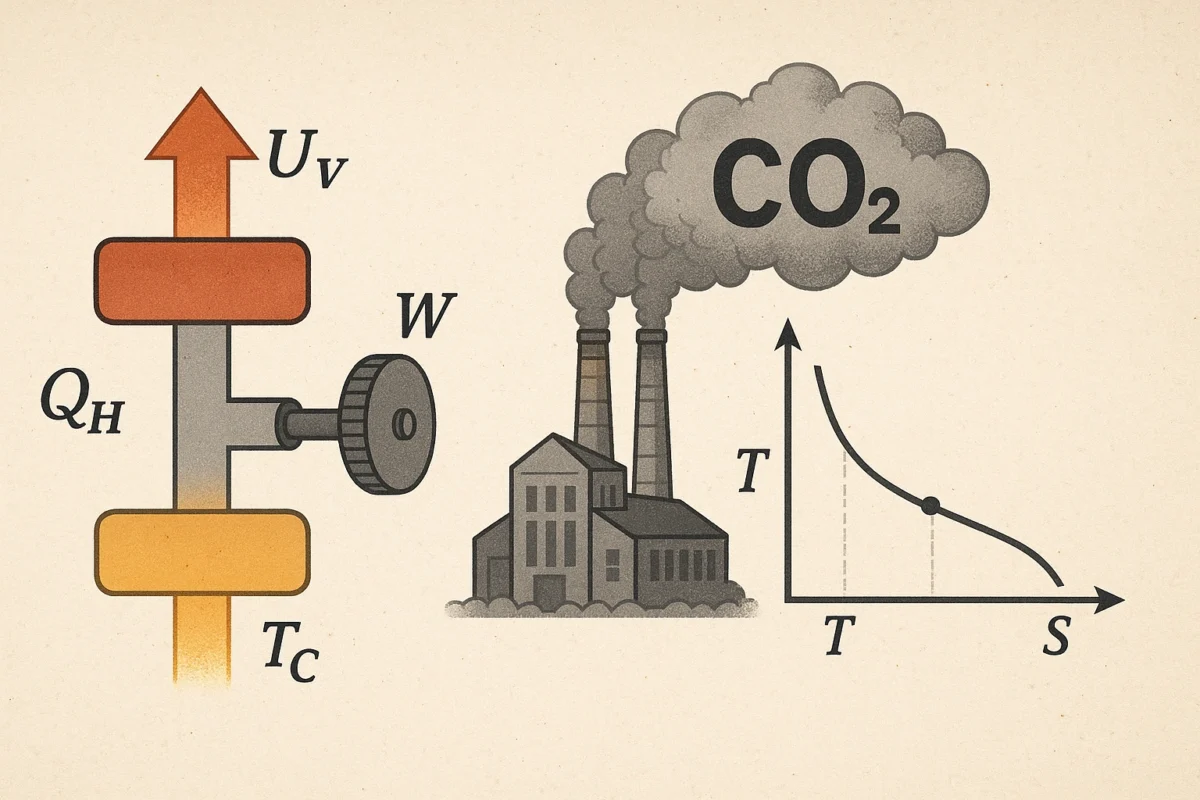
When we talk about industrial carbon emissions, most people immediately point to one thing: burning fuel. But that’s only part of the story. The true, deeper culprit lies in thermodynamics. Think of it this way: every industrial process from firing up a steel mill to refining crude oil or generating electricity is fundamentally inefficient. Energy is constantly bleeding away through heat loss, friction, incomplete combustion, and other systemic flaws.
These losses don’t just cost money and reduce performance; they force industries to burn more fuel than they should, significantly increasing emissions. To genuinely clean up industry, we must first understand this thermodynamic relationship.
In this article, we will break down exactly how energy is wasted, where it escapes, and, crucially, how smart engineering and next-generation strategies can transform these unavoidable losses into real-world carbon efficiency gains.
Why Thermodynamics Is Central to Emissions
At its core, thermodynamics explains how energy flows in industrial systems. When energy is transferred or transformed, some of it becomes unusable lost as heat, vibration, or exhaust. These inefficiencies drive up fuel consumption and, in turn, carbon output.
Key principles behind thermodynamics emissions include:
The First Law: Energy cannot be created or destroyed, only transformed.
The Second Law: Every transformation contains irreversible losses.
Entropy: Systems naturally move toward disorder, increasing energy waste.
The more energy lost in a system, the more fuel must be burned to maintain production levels. More fuel burned equals more emissions.
Where Industrial Energy Loss Happens
Industrial systems are complex networks of heat, pressure, fluids, and mechanical components. Each stage creates opportunities for energy to leak out.
1. Combustion Inefficiency
Industrial boilers, furnaces, turbines, and engines rarely achieve perfect combustion. Incomplete fuel burning creates:
- Excess CO₂
- Unburned hydrocarbons
- Carbon monoxide
- Particulate matter
The gap between theoretical and actual combustion efficiency directly affects carbon intensity.
2. Heat Transfer Emissions
Heat transfer is one of the primary causes of energy loss. Hot surfaces, exhaust gases, and thermal leaks cause industries to burn more fuel to compensate.
Common forms of heat loss include:
- Radiative heat escaping from furnaces
- Conductive loss through poorly insulated equipment
- Convective loss from hot air circulating unused
This creates a strong link between heat transfer emissions and total industrial carbon output.
3. Mechanical Friction and Wear
Friction inside turbines, compressors, pumps, and motors wastes mechanical energy and increases energy demand.
4. Exhaust and Flue Gas Losses
Exhaust streams often carry significant unused thermal energy. In many facilities, flue gas leaves stacks at temperatures far above ambient, representing massive untapped efficiency potential.
5. Process Integration Gaps
Industrial plants are often built over decades, leading to poorly integrated systems that fail to recycle heat and energy across stages.
When we analyze industrial emissions through a thermodynamic lens, the biggest insight emerges: Carbon output is a symptom of inefficiency.
Also See: How Carbon Intelligence Shapes the Price of Pollution
Energy Loss Analysis: Why It Matters
Energy loss analysis identifies hidden inefficiencies in industrial settings. Using tools such as thermal imaging, exergy analysis, and system modeling, engineers can quantify where energy escapes and how much carbon it generates.
Energy analysis reveals:
- Which processes waste the most heat
- Where insulation upgrades deliver the biggest gains
- How exhaust energy can be reused
- Whether combustion systems are optimized
- If equipment is oversized or underperforming
- How much fuel is required to compensate for losses
For industries pursuing industrial carbon efficiency, this analysis is one of the most powerful tools available.
Heat Transfer and Emissions: The Hidden Connection of Thermodynamics
Heat transfer is the backbone of industrial production, from chemical reactions to material processing. But poor heat transfer design or management leads to significant energy waste.
1. Conduction Loss
Occurs when thermal energy leaks through metal surfaces, pipes, refractory walls, or casings.
2. Convection Loss
Happens when hot air circulates around equipment and escapes into the environment.
3. Radiation Loss
Common in high-temperature industries, steel, cement, glass, and refineries.
Each type of heat transfer loss lowers thermal efficiency and increases carbon intensity. Improving heat exchange efficiency through better exchanger design, insulation, and process integration directly reduces emissions.
Process Energy Optimization: Closing the Efficiency Gap
To reduce emissions, industries must minimize energy loss at every stage of production. This is where process energy optimization becomes essential.
Effective optimization includes:
1. Waste Heat Recovery
Capturing energy from exhaust gases, cooling water, or hot surfaces and reusing it for:
- Preheating combustion air
- Steam generation
- Power production
- Industrial heating
2. Equipment Upgrades
High-performance burners, low-friction components, efficient motors, and modern heat exchangers drastically improve energy use.
3. Process Integration
Linking systems to reuse thermal energy across production lines.
4. Automation & Real-Time Monitoring
Sensors, AI, and predictive analytics detect inefficiencies early.
5. Fuel Switching
Replacing coal or oil with gas, hydrogen, or renewables reduces thermodynamic losses and emissions.
Optimized processes don’t just cut emissions—they reduce operational costs and improve system reliability.
Emissions Reduction Technology: Thermodynamics in Action

Modern emissions reduction technology relies heavily on thermodynamic engineering. These solutions aim to minimize energy loss, improve heat recovery, and reduce reliance on fuel-intensive processes.
Leading technologies include:
- Low-NOx and high-efficiency burners
- Carbon capture and storage (CCS)
- High-temperature heat pumps
- Advanced insulation systems
- Regenerative thermal oxidizers (RTOs)
- Combined heat and power (CHP)
- Industrial heat batteries & thermal storage
- Electrification of process heat
- Hydrogen-based heating systems
All these advances help industries break the cycle where energy loss drives excessive emissions.
The Role of Industrial Decarbonization
Industrial sectors like cement, steel, chemicals, mining, and refining face some of the hardest decarbonization challenges. Their high temperatures and complex thermodynamics make emissions difficult to avoid but not impossible to reduce.
Industrial decarbonization requires attacking emissions from two angles:
Reduce energy loss (efficiency first strategy): Cutting waste reduces fuel demand and immediately lowers carbon output.
Decarbonize the remaining energy: Through renewable heat, hydrogen, electrification, and carbon capture.
A thermodynamics-based approach helps companies set realistic emissions goals and adopt technology that aligns with the physics of their processes, not just environmental policy.
Future Trends in Thermodynamics and Emissions
The next decade will see industries transform how they use and manage energy. Emerging innovations include:
- AI-driven thermodynamic modeling to predict energy loss
- Advanced exergy optimization across entire plants
- Electrified ultra-high-temperature systems
- Hybrid renewable-thermal production cycles
- Closed-loop thermal ecosystems for zero heat waste
As engineering tools evolve, industries will push closer to the ideal of near-zero energy loss and near-zero emissions.
FAQ: Thermodynamics and Emissions
How does thermodynamics affect industrial emissions?
Thermodynamics determines how energy moves through industrial systems. When energy is lost through heat, friction, or inefficiency, more fuel must be burned, increasing carbon emissions.
Why is heat transfer important in emissions analysis?
Poor heat transfer design or insulation leads to significant energy waste, forcing industries to consume more fuel and release more CO₂.
What is the link between energy loss and carbon intensity?
Higher energy loss means lower efficiency. Lower efficiency requires more fuel, directly increasing carbon output.
What technologies help reduce thermodynamic losses?
Heat recovery, high-efficiency burners, advanced insulation, electrification, CCS, and real-time monitoring systems all reduce energy waste and emissions.
Conclusion
Industrial emissions are not just a byproduct of combustion, they are a thermodynamic problem. Energy loss through heat transfer, friction, inefficient combustion, and poor process integration forces industries to burn more fuel, driving up carbon intensity.
By understanding the thermodynamics of emissions, companies can identify where energy escapes, improve industrial carbon efficiency, optimize processes, and adopt new emissions reduction technology.
The future of industrial decarbonization lies in engineering systems that minimize loss and maximize usable energy. When industries treat energy waste as the true enemy of efficiency, meaningful carbon reduction becomes achievable.