
Neural Networks of Nature: How Deep Learning Decodes Emission Patterns

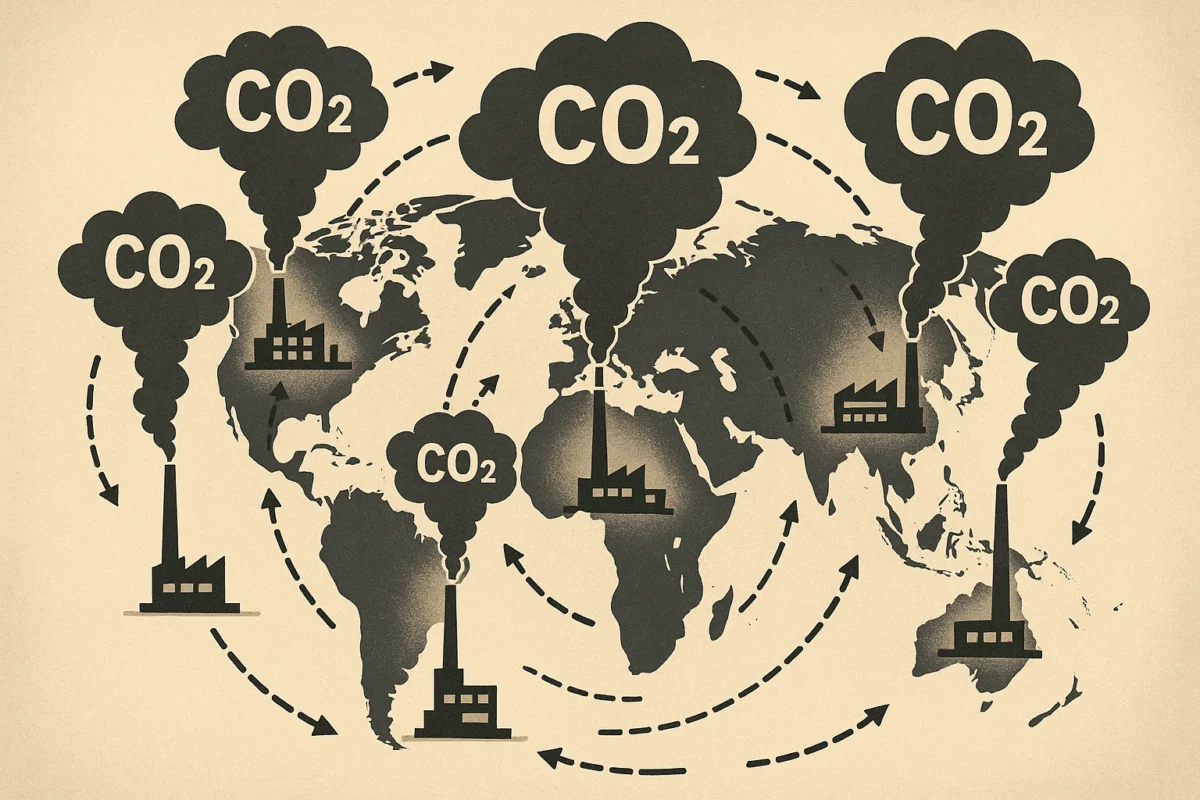
Tracking global carbon emission patterns is one of the toughest jobs in environmental science. The data is incredibly messy and unpredictable. Emissions jump up and down constantly, influenced by everything from where you are, to the weather outside, what time it is, which industry is operating, how supply chains are moving, and countless specific operational details.
For decades, we had to rely on old, static tools, slow manual reports, and a lot of educated guesses just to estimate a carbon footprint. But this method had a serious flaw: human analysts simply can’t spot the deep, hidden patterns scattered across millions of data points.
That’s where deep learning comes in.
Modern neural networks can now make sense of the chaos. They learn to find hidden connections in emissions data just as easily as they learn to translate speech, help doctors diagnose illnesses, or predict stock market trends. What used to look like random noise has suddenly become readable, measurable, and even predictable.
In this article, let’s explore how these powerful new deep learning models are changing the game for carbon analysis.
Why Emission Patterns Are Hard to Decode Without AI
Emissions are influenced by multiple dynamic factors:
- Equipment efficiency
- Weather and temperature
- Energy source fluctuations
- Industrial load cycles
- Logistics volumes
- Supply chain irregularities
- Human decisions and operational timing
These variables create highly nonlinear patterns. Traditional carbon accounting tools often treat emissions as linear values tied to activity (e.g., fuel burned, miles driven, units produced). But nature doesn’t follow straight lines, it produces fractal-like, multi-variant patterns that change constantly.
Without AI, organizations face:
- Data blind spots
- Misreported emissions totals
- Inaccurate forecasting
- Reactive rather than proactive climate strategy
- Deep learning solves this by identifying structure within disorder.
What Is Deep Learning in the Context of Emissions Patterns?
Deep learning uses layered neural networks to process huge datasets and detect relationships that humans or traditional software cannot. When applied to sustainability, it becomes an engine for decoding how, when, and why emissions occur.
Deep learning sustainability models can:
- Recognize patterns in CO₂, NOₓ, methane, and particulate emissions
- Understand correlation between industrial variables
- Predict emission spikes before they occur
- Segment sources with high precision
- Forecast future emissions under various scenarios
- Automatically classify carbon intensity by activity
This is the foundation of AI in carbon accounting transforming raw data into scientific insight.
Also See: Real-Time Carbon Data: Why It Matters for Emissions Monitoring
How Neural Networks Decode Emission Patterns
Deep learning excels at pattern recognition. Here’s how it works step-by-step:
1. Multi-Layer Pattern Recognition
Neural networks operate through layers of nodes that progressively learn representations of data. In emissions tracking:
- Layer 1 may detect daily fluctuations
- Layer 2 identifies weather-linked signals
- Layer 3 recognizes supply chain–induced spikes
- Layer 4 learns annual cycles related to production planning
By the final layers, the system can distinguish micro-patterns invisible to conventional tools.
2. Feature Extraction from Complex Carbon Datasets
Unlike traditional models, which rely on predefined features, deep learning discovers relevant features automatically.
For example, the network might reveal:
- A 3:00 a.m. emissions spike tied to refrigeration cycles
- A pattern of increased CO₂ during certain humidity conditions
- Logistic peaks linked to specific transport routes
- A correlation between maintenance events and methane leaks
This allows for hyper-specific environmental insights.
3. Predictive Emission Patterns Modeling
Deep learning doesn’t just analyze, it forecasts. Predictive emissions modeling helps:
- Anticipate carbon-intensive production phases
- Predict future scope 1 emissions from equipment degradation
- Forecast scope 2 emissions tied to energy grid load
- Estimate scope 3 emissions from supply chain partners
These predictions guide proactive sustainability strategy rather than reactive reporting.
4. Anomaly Detection for Emission Spikes
Neural networks can identify abnormal emission activity by learning what’s “normal.”
Examples include:
- A malfunctioning furnace releasing excessive NOₓ
- A sudden methane leak from a pipeline
- A transport route causing unusually high CO₂ output
This transforms traditional carbon reporting into real-time carbon intelligence.
The Science Behind AI Carbon Analysis

To understand why deep learning is so effective, we must look at three scientific principles:
Nonlinear Dynamics
Emission behavior mirrors weather systems which are highly nonlinear, complex, and influenced by countless variables. Deep learning handles nonlinear patterns effortlessly.
Probabilistic Inference
Neural networks generate probability-based predictions, ideal for forecasting emissions that inherently fluctuate.
Temporal Modeling
Through recurrent neural networks (RNNs) and LSTMs, deep learning understands patterns over time crucial for long-term sustainability planning.
Applications of Deep Learning in Carbon Accounting
1. Automated Carbon Footprint Calculations
Neural networks can clean, structure, and compute emissions far faster and more accurately than manual systems. This improves the integrity of sustainability reports.
2. Real-Time Industrial Emissions Monitoring
IoT sensors + deep learning = continuous carbon visibility. Examples include:
- Monitoring factory exhaust
- Tracking methane leaks
- Measuring vehicle emissions in logistics fleets
- Understanding live carbon intensity in facilities
3. Smart ESG Dashboards with Pattern Recognition
Companies can visualize:
- Hidden emission contributors
- Daily/weekly carbon cycles
- Facility-output relationships
- Predictive carbon spikes
This helps executives to act before regulations require it.
4. Supply Chain Emissions Intelligence (Scope 3)
Scope 3 is notoriously difficult, but deep learning can analyze:
- Vendor emissions patterns
- Freight movement behavior
- Procurement-linked carbon signals
This leads to more accurate GHG reporting and stronger sustainability governance.
5. Climate Risk Modeling
Neural networks simulate how operational changes affect emissions, allowing companies to test:
- What if output increases 10%?
- What if renewable energy adoption accelerates?
- What if transportation routes are optimized?
These digital twins make climate planning precise.
Why This Matters: AI as the Future of ESG Data Integrity

Global regulators increasingly demand granular, verifiable carbon data. But without deep learning, emissions remain partially invisible or inaccurately estimated.
Deep learning improves ESG reporting by:
- Increasing accuracy
- Automating calculations
- Reducing human error
- Enabling predictive compliance
- Ensuring transparency
- Identifying hidden emissions drivers
This transforms ESG from reactive documentation to proactive environmental science.
Conclusion
The world of nature is incredibly complex, full of intricate, messy, and interconnected patterns. Frankly, our traditional methods for tracking carbon simply weren’t designed to handle this kind of complexity. But deep learning is different.
By finally being able to decode the subtle, hidden rhythms of emissions, deep learning elevates environmental monitoring from a best guess to true scientific precision. This gives companies the power to get ahead of the problem, cut emissions proactively, easily meet strict new regulations, and make sustainability something we can genuinely measure and act upon.
The hidden, intelligent networks of nature are everywhere. With the help of AI, we finally have the right tools to understand them.
FAQ: Emission Patterns
What makes deep learning better than traditional emissions modeling?
It detects nonlinear patterns and relationships invisible to traditional statistical models.
Can deep learning help with Scope 3 emissions?
Yes, especially through supply chain behavior analysis and predictive forecasting.
Do companies need large datasets to start?
Not necessarily. Pre-trained models and transfer learning accelerate adoption.
Is AI carbon analysis accepted in ESG reporting?
Increasingly yes, regulators are embracing AI-driven accuracy.